

Insights
Follow-up & operations3 min readUpdated
Why Home-Service Leads Go Cold After the Form Fill (And How to Fix It)
Form leads going cold? Learn why home-service inquiries stall after submission and how ownership, speed, and follow-up fix the handoff.
Diagnostic focus:
Diagnose why home-service form submissions fail to become booked work.
Helpful?
Save or share this insight with someone diagnosing the same path.
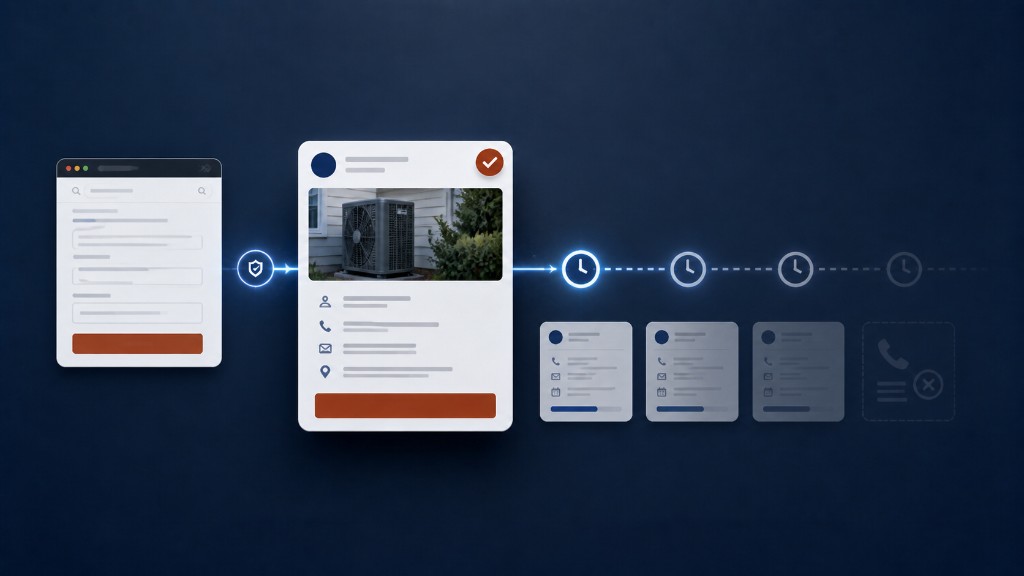
A form submission is not a conversion if nothing meaningful happens after it.
For a lot of home-service companies, that is exactly where good leads disappear.
The lead looks real.
The form comes through.
Then one of three things happens:
- nobody owns the next step
- the response is too slow
- the follow-up path is inconsistent
Why this happens
Most businesses do not lose these leads because they do not care.
They lose them because the handoff is weak.
That usually means:
- forms land in inboxes nobody is actively watching
- after-hours leads wait too long
- the office is busy and call-backs happen late
- no one can see which lead has been touched and which has not
- the page, ad, and follow-up process are not connected
That is the job of lead routing and follow-up: not more software for its own sake, but clearer ownership after the inquiry.
Why form leads stop responding
Form leads often stop responding because too much time passes before the next real action. By the time someone calls back, the homeowner may have contacted another company, forgotten the request, or lost confidence that the business is on top of it.
Why the website still matters
Even when the post-form handoff is the real bottleneck, the website still shapes the outcome.
If the form asks too much, if the page feels generic, or if the trust cues are weak, you make the follow-up harder before it begins.
That is why the page experience and the handoff should be diagnosed together. If the page itself is carrying too much friction, review what a contractor landing page needs to generate calls.
What good looks like
A healthy post-form process usually has:
- a clear owner
- quick acknowledgement
- a defined next action
- after-hours handling
- visibility into what happened after submission
Without that, "more leads" often just means more waste.
What to check first
If form leads are going cold, check:
- where forms actually land
- who owns the next call or message
- how long the average delay is
- what happens after hours
- whether the site is attracting the right kind of inquiry in the first place
If the lead path depends on someone noticing an email instead of owning the next step, the form is not really connected to the business.
For home-service teams, that last point matters because a form can be technically complete and still be the wrong kind of job, area, or urgency. If the timing is the issue, check how fast you should follow up.
What to do next
If form fills are happening but booked work is not following, do not assume the answer is more traffic or a prettier page.
The first fix is often the handoff.
Flowpoint reviews the page, the lead path, and the follow-up process together so you can see whether the real issue is page quality, slow response, unclear ownership, or the gap between them. For a scoped follow-up lane, see contractor lead follow-up systems.
A Free Lead Audit follows the same diagnostic approach outlined in How we work: find the bottleneck before prescribing the fix.
Helpful?
Save or share this insight with someone diagnosing the same path.
Found this useful? Share it with someone fixing the same problem.