

Field Notes
Home services2 min readUpdated
Roofing Marketing After Storms: How to Avoid Low-Quality Estimate Chaos
Storm-driven roofing demand can flood your office with weak estimates. Build storm pages, clear inspection paths, and follow-up that qualifies repair vs replacement intent.
Diagnostic focus:
Help roofing operators structure storm response marketing without overclaiming or drowning in low-fit leads.
Helpful?
Save this Field Note or share this Field Note with someone diagnosing the same path.
Storm season can look like a marketing win and feel like an operations mess.
Roofing companies often see a spike in form fills and calls after weather events. The problem is not volume alone—it is whether those inquiries are inspection-ready, in your service area, and aligned with repair vs replacement intent. Without that filter on the page and in follow-up, the office drowns in low-quality estimate chaos.
Storm response pages need a single job
A storm response page should do one thing: help the homeowner take the next sensible step—usually inspection request, damage check, or a clear estimate path—not read your entire company history first.
For hero structure, see contractor landing pages above the fold. Roofing storm traffic still needs service area, proof, and a visible next step without cramming insurance language into the first line.
Repair vs replacement intent
Some callers need a targeted repair. Others are already in replacement mindset. If the page treats every inquiry the same, estimators spend time disqualifying people the page should have filtered gently.
- plain language about what you inspect first
- separate cues for leak repair vs full replacement consultations
- honest notes about timelines when crews are already booked
Insurance-sensitive wording without overclaiming
Homeowners often ask about insurance after storms. Your page can explain how inspections work and what documentation you provide without promising outcomes you cannot control. Avoid language that sounds like you are adjusting claims or guaranteeing coverage—that creates trust problems later.
Use proof you can stand behind: local jobs, crew photos, review themes, and clear neighborhood trust signals—not generic storm banners with no substance.
Proof placement and quote clarity
Roofing buyers want to know you have done this work nearby. Put proof near the inspection or estimate action, not on a separate page they may never open.
Quote and estimate request path copy should say what happens next: inspection window, who calls back, what photos help. That reduces tire-kickers and curbs angry callbacks from people who expected an instant price.
Lead qualification before the office breaks
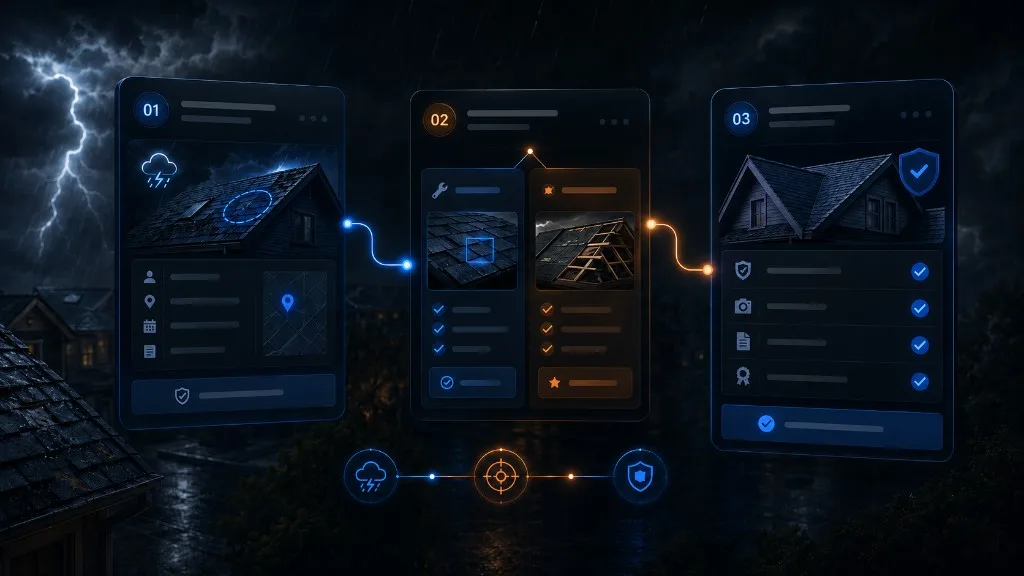
Qualification starts on the page: geography, property type, problem description, and whether they need emergency tarping vs standard inspection. Forms should feed contractor lead follow-up systems with enough context that the first callback is useful.
When storm spend jumps, pair home-service paid ads management with landing message match—not broader targeting alone.
What to do next
Flowpoint aligns roofing marketing agency scope to storm pages, proof, and handoff quality. Compare notes with home services or start with a Free Lead Audit before the next weather spike.
Helpful?
Save this Field Note or share this Field Note with someone diagnosing the same path.
Found this useful? Share it with someone fixing the same problem.