

Skip to content

Flowpoint Marketing

Lead follow-up

Contractor lead follow-up system for calls, forms, and ownership

A lead is only valuable if someone owns the next step. Contractors lose jobs when calls get missed, forms land in the wrong place, or everyone assumes someone else handled it. Flowpoint helps make speed and ownership visible in the tools your team already checks.

Get a human review of where the lead path is leaking. Ready to talk through the next move? Book a fit call instead.

Speed-to-lead · Missed calls · Callback ownership

Who this page is for

  • Contractors who get leads but see too many stall before an estimate.
  • Teams where calls, texts, and forms arrive in different systems.
  • Operators who need a clearer process before adding more automation.

What usually breaks

  • Missed calls do not trigger a clear recovery step.
  • Forms reach an inbox but no one owns the callback.
  • Office staff and field teams do not see the same lead status.
  • Automation adds messages without fixing accountability.

What Flowpoint fixes

  • Lead ownership rules for calls, forms, and after-hours requests.
  • Callback paths that make speed-to-lead visible to the team.
  • Routing guidance that fits the CRM, inbox, or field tools you already use.
  • Follow-up language and status cues that reduce stalled leads.

Why this matters for booked jobs

If leads arrive but do not book, the problem may not be demand. It may be the handoff after first touch. A better follow-up system helps protect the demand you already paid to create.

First audit angle

Find the leak before adding more motion.

We look for the first practical break: page clarity, traffic quality, service-area fit, call handling, or follow-up ownership.

What follow-up needs before software

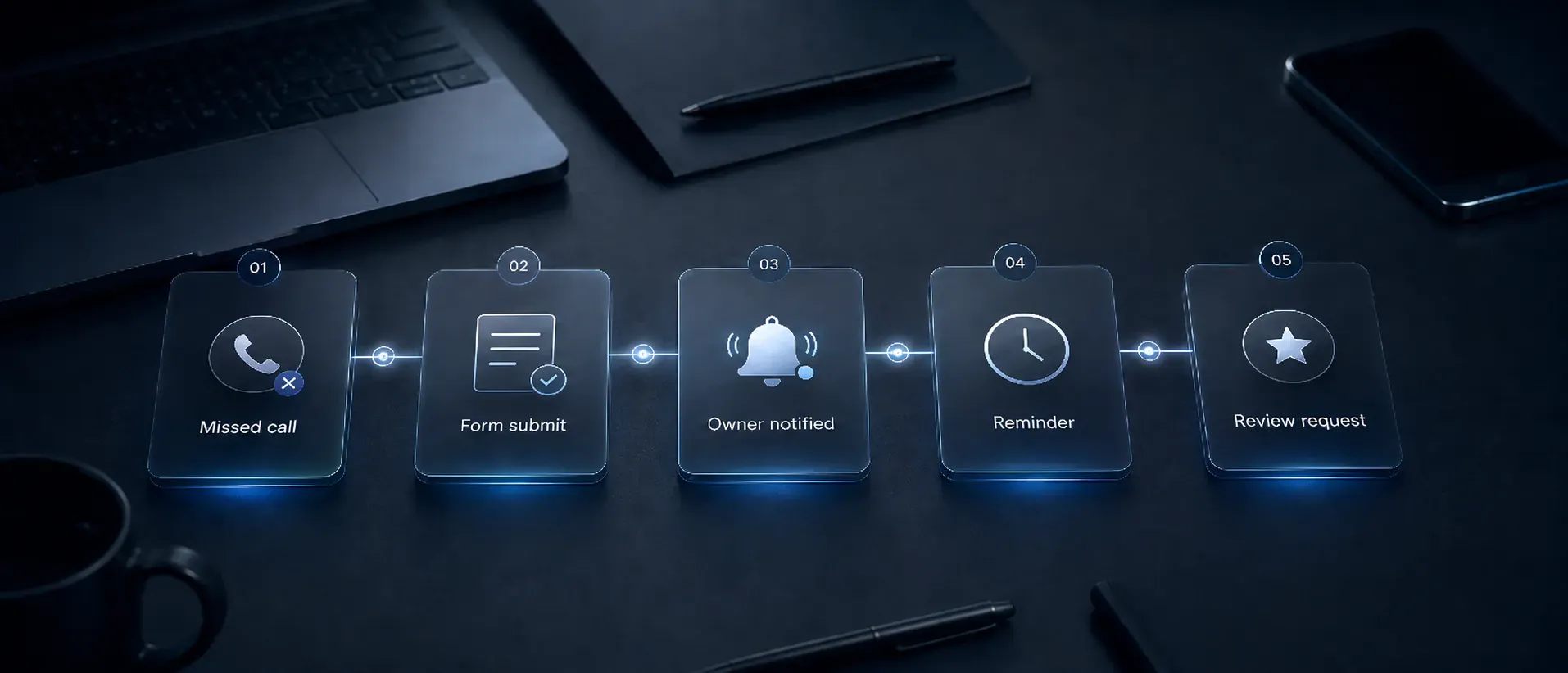
A useful follow-up system starts with ownership. Who answers first, what happens after a missed ring, when a form needs a call, and how the team knows a lead is still open should be clear before new tools are added.

Automation can help, but it should not hide a fuzzy process. We first map the human path, then decide where reminders, routing, scripts, or software support make sense.

What we can show today

Follow-up work is easy to overclaim, so we keep this section plain. We can show routing logic, process thinking, and where ALTITUDE may fit. Real client outcomes are published only when approved.

Questions we get a lot

What is a contractor lead follow-up system?
It is the process and tooling that decide who owns a lead, how fast they respond, what happens after a missed call or form, and how the team knows the next step is complete.
Does this replace our CRM?
Usually no. We work with the tools your team already uses when they are viable. If the tool is part of the problem, we say that after mapping the current handoff.
What if we already respond fast?
Then we look for the next leak: lead quality, routing clarity, stale opportunities, source visibility, or whether the page is setting the wrong expectation.
Should follow-up be automated?
Some parts can be. Automation should support the human process, not cover for the fact that nobody owns the lead.
How fast can we see what is broken?
Often quickly. Missed-call handling, form destination, owner assignment, and callback timing usually reveal the first break during a lead audit.

Want the lead path checked first?

Get a Free Lead Audit keeps the first step practical: what is leaking, what to fix first, and whether a fit call makes sense after that.