


Flowpoint Marketing
Local SEO · Service-area businesses
Local SEO for service-area businesses
Help nearby customers find your services and contact you. We improve your website, service pages, and Google Business Profile, then track the searches and inquiries that guide the next improvements.
Site structure · Service pages · Profile support · Inquiry tracking
Local SEO that matches how customers search
Clear service areas, useful service pages, and direct inquiry paths that help nearby customers understand what you do.
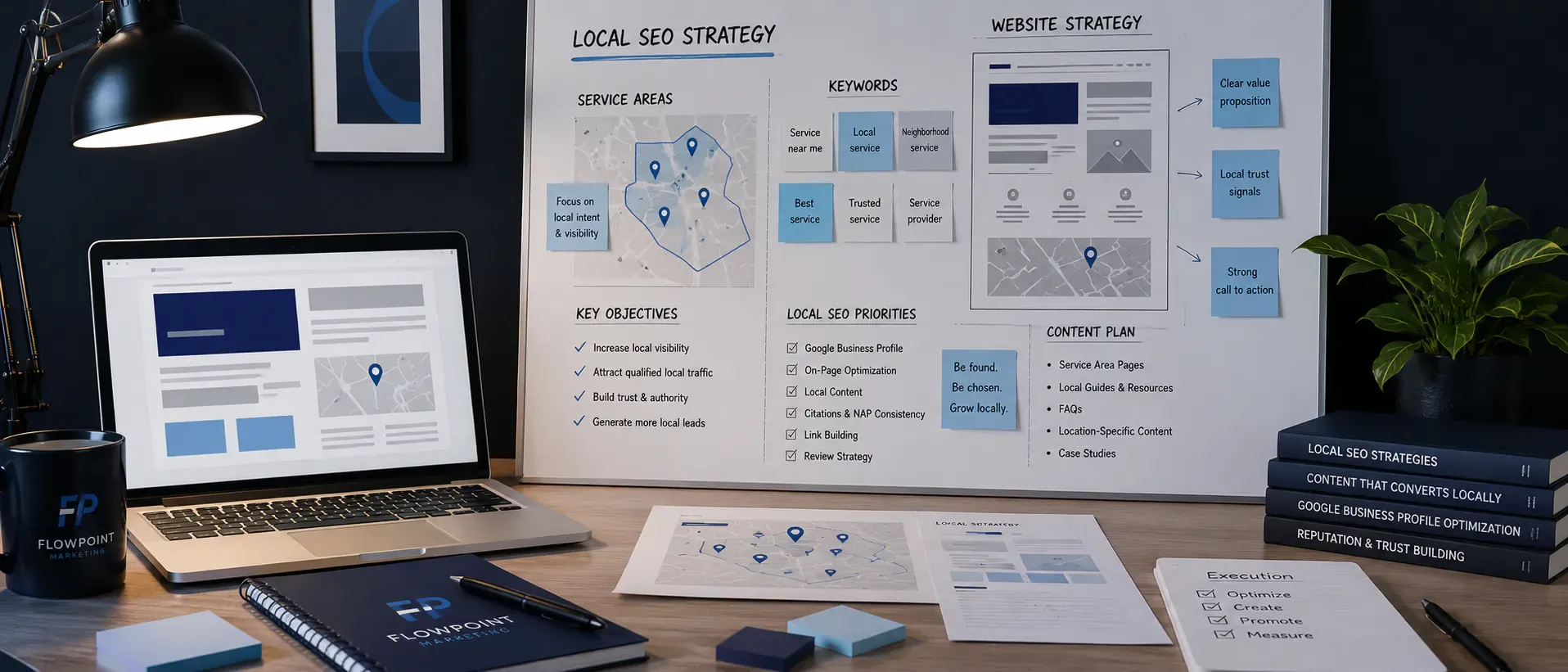
Local SEO planning for service areas, page intent, and the pages that should earn the call.
Editorial planning visual. Not a client deliverable screenshot and not a ranking claim.
What this fixes
- Pages that do not clearly explain your services or area
- Technical issues that make pages difficult to find
- Search traffic that does not lead to relevant inquiries
Who this is for
- Businesses serving a defined local area
- Teams with useful services but limited search visibility
- Businesses whose website and Google profile need updating
What is included
- Review of search performance and priority services
- Service-page and location content recommendations
- Technical SEO, titles, headings, and internal links
- Google Business Profile and website consistency
- Checks for conflicting business details in listings
- Call and form tracking review when included in scope
Local visibility signals we strengthen
- Clear business identity: who you are, what you do, and where you serve.
- Service-area clarity without thin city-page spam or doorway pages.
- Useful service pages instead of keyword swaps with no real offer behind them.
Check your website first
Our free scan checks your public website and provides a prioritized fix list. To discuss services, pricing, or a project timeline, send us a project request.
Questions we get a lot
How is local SEO different from SEO?
Can you guarantee rankings?
Do we need a page for every town?
Can you help track inquiries?
Let’s talk about your project
Share your goals and we’ll recommend the work, scope, and next steps.