

Skip to content

Flowpoint Marketing

Paid ads management

Home-service paid ads management with landing page accountability

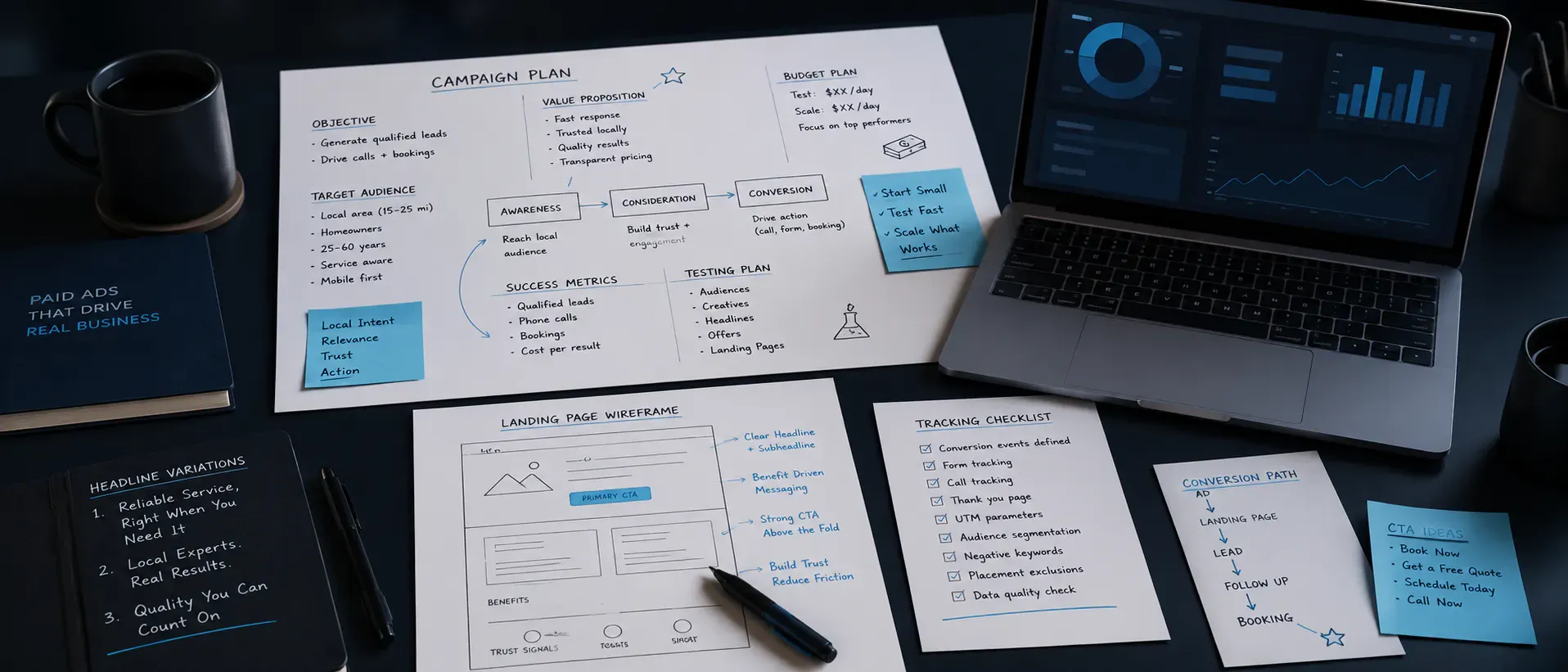
Paid ads for home services can create demand fast, but bad fit gets expensive just as fast. Flowpoint manages paid search and social around territory, job type, landing page match, and call visibility so you can judge more than clicks and spend.

Get a human review of where the lead path is leaking. Ready to talk through the next move? Book a fit call instead.

Search · Social · Territory and call visibility

Who this page is for

  • Home-service companies spending on ads without a clear view of lead quality.
  • Teams seeing clicks from ZIPs, services, or job types they do not want.
  • Operators who need landing pages and follow-up to match paid traffic before budgets grow.

What usually breaks

  • Campaign geography does not match the service area your crews can cover.
  • The landing page repeats a generic promise instead of the ad offer.
  • Call tracking shows volume but not whether the leads were worth staffing.
  • Budget decisions are made from platform dashboards alone.

What Flowpoint fixes

  • Campaign structure tied to service lines, ZIPs, and realistic capacity.
  • Landing page message match so paid clicks do not hit a weak generic page.
  • Call and form tracking that supports decisions about lead quality.
  • Readouts that show what should change next, not just what was spent.

Why this matters for booked jobs

Paid ads are useful only when the leads can become work. The goal is better demand, clearer source visibility, and fewer dollars spent sending people into a broken page or handoff.

First audit angle

Find the leak before adding more motion.

We look for the first practical break: page clarity, traffic quality, service-area fit, call handling, or follow-up ownership.

What paid ads need before they scale

Home-service paid ads should be built around the jobs and territory you can actually serve. ZIP mismatch is not a minor setting when it fills the office with calls your team should not take.

Landing pages matter because paid traffic has context. Someone who clicked an emergency repair ad should not land on a broad company story before they can understand the next step.

What we can show today

Paid media proof should not be padded with platform screenshots or vague scoreboard claims. We show the operating logic, landing-page match, and approved case studies when the work is public.

Questions we get a lot

Which paid channels should a home-service company use?
It depends on the market, service line, budget, and landing path. Search is often closest to demand. Social can support specific offers or retargeting. The mix should follow the jobs you can staff.
What should be fixed before increasing ad spend?
Landing page match, call visibility, service-area settings, and follow-up ownership. More spend usually makes those problems louder.
Do you manage Google Ads and Meta?
Yes, when those channels fit the goal. We care less about forcing a channel and more about whether the traffic has a clear path to a booked job.
How do you judge paid ad quality?
We look at source, service intent, geography, calls, forms, and what the office can verify. Clicks alone do not tell enough of the story.
Can paid ads work with our existing website?
Sometimes. If the current site can carry the offer and track the next step, we can use it. If not, a landing page or web fix should come first.

Want the lead path checked first?

Get a Free Lead Audit keeps the first step practical: what is leaking, what to fix first, and whether a fit call makes sense after that.